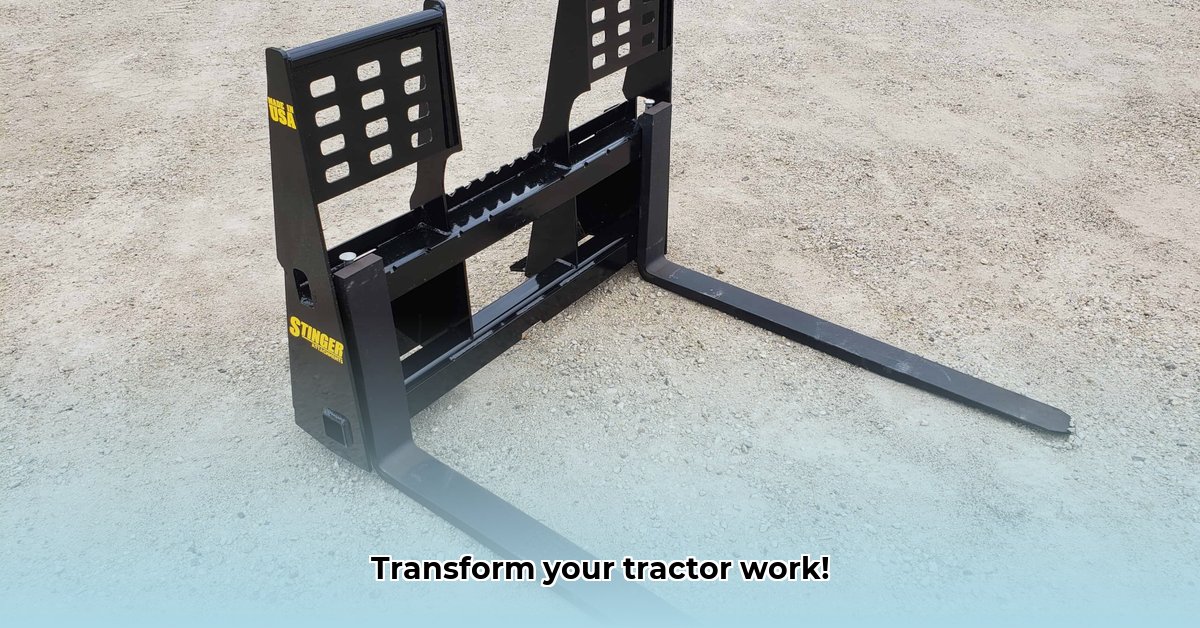
Tired of wrestling with heavy loads and wasting precious time on your farm? Quick attach forks are a game-changer for tractor efficiency, offering a significant boost in productivity and ease of use. This comprehensive guide will walk you through everything you need to know, from choosing the right forks for your needs to maintaining them for years of reliable service. For specific John Deere compatibility, check out this helpful resource: John Deere forks.
Understanding Quick Attach Systems: The Heart of Efficiency
Quick attach systems are revolutionary mechanisms that allow for the rapid and safe exchange of tractor implements. Instead of wrestling with pins and bolts, a simple, secure locking system enables quick changes between forks, buckets, blades, and more. This significantly reduces downtime and increases overall efficiency. However, it’s crucial to understand that compatibility varies. Some systems are universal, fitting various tractor brands, while others are brand-specific (e.g., John Deere, New Holland). Always consult your tractor's manual to ensure compatibility and avoid potential safety hazards. Think of it as ensuring the right plug fits the right socket—a mismatch could lead to damage or injury.
Choosing the Right Forks: A Precision Approach
Selecting the perfect forks involves a meticulous assessment of your needs. Making the wrong choice can lead to inefficiency or even dangerous situations. Here's a systematic approach:
1. Capacity: Lifting Power
Determine the maximum weight you'll regularly lift. Underestimating this crucial factor can lead to equipment failure and potentially serious injury. Always select forks with a capacity exceeding your heaviest anticipated load. A safety margin is essential. Consider future needs as well; you might need to lift heavier items in the years to come.
2. Fork Length: Reach and Maneuverability
Fork length directly impacts your reach and maneuverability. Shorter forks excel in tight spaces, providing better control in confined areas. Longer forks cater to larger, bulkier loads but may limit lift height. Consider the dimensions of the pallets or materials you'll handle most frequently. A common range is 36 to 60 inches, but the ideal length is dependent on your specific applications. Don't sacrifice maneuverability for reach if working in narrow spaces.
3. Mounting System: Secure Connections
The mounting system ensures a secure connection between your forks and your tractor. Universal systems offer broader compatibility but may not be as robust as brand-specific options. Brand-specific systems generally provide a more secure and reliable connection. Understanding your tractor's system is crucial for selecting compatible forks. Opt for a system known for its durability and safety features. Examine the locking mechanisms carefully.
4. Material: Strength and Durability
The material significantly impacts the strength, durability and lifespan of your forks. Hardox 450 steel, a high-strength, wear-resistant steel, is a premium choice known for its exceptional longevity. While more expensive, its resistance to wear and tear justifies the investment for heavy-duty applications and frequent use. Standard steel provides a more budget-friendly option, offering adequate strength for lighter loads and less frequent usage. High-tensile steel sits between these two, offering a balance of strength and affordability.
| Material | Strength | Durability | Cost | Typical Use Cases |
|---|---|---|---|---|
| Hardox 450 | Very High | Excellent | High | Heavy-duty lifting, frequent use, demanding tasks |
| High-Tensile Steel | High | Very Good | Above Moderate | Moderate use, diverse loads |
| Standard Steel | Moderate | Good | Moderate | Lighter loads, infrequent use |
Installation and Operation: A Step-by-Step Guide
Installing and operating your quick attach forks requires precision and adherence to safety protocols. Improper use can lead to costly damages or even injuries. Follow these steps:
- Prepare the Hitch: Raise your tractor's three-point hitch to its highest position for easy alignment.
- Align the Forks: Carefully align the forks with your tractor's quick attach plate. Precision is paramount – ensure a perfect fit.
- Secure the Connection: Engage the locking mechanism firmly. A distinct "click" confirms a secure connection. If there's no click, double-check alignment before proceeding.
- Stability Test: Gently lower the forks to test their stability. Any instability indicates a problem requiring immediate attention. Do not operate the forks if there is any doubt.
- Safety First: Always consult your fork's manual for specific safety instructions. Never exceed the rated weight capacity and always wear appropriate safety gear.
Maintenance and Troubleshooting: Extending Fork Lifespan
Regular maintenance is vital for extending the life of your forks. A proactive approach minimizes costly repairs and ensures safe operation.
- Regular Inspection: Check for cracks, excessive wear, loose bolts, or damage after every use.
- Lubrication: Lubricate moving parts, such as the locking mechanism, regularly to prevent friction and wear.
- Cleaning: Regularly remove dirt and debris that could compromise functionality or lead to corrosion.
- Tighten Bolts: Frequently check and tighten all bolts to prevent loosening and potential safety hazards.
Addressing minor issues promptly prevents them from escalating into major problems.
Choosing a Reputable Supplier: A Foundation of Trust
Selecting a reliable supplier is as crucial as choosing the right forks. Consider these factors:
- Positive Reviews: Check online reviews and testimonials to gauge the supplier's reputation and customer satisfaction.
- Warranty: A robust warranty demonstrates the supplier's confidence in their product's quality.
- Customer Service: Seek suppliers with readily available customer support and a proven track record of assisting clients.
- Pricing: Compare prices from different suppliers but don’t solely prioritize the cheapest option – often, quality justifies a slightly higher price.
Investing in quality forks from a reputable supplier is an investment in long-term efficiency and safety.
Conclusion: Reap the Rewards of Efficiency
Quick attach forks represent a significant upgrade for any tractor, offering unparalleled efficiency and convenience. By following this guide, you can confidently select, install, and maintain your forks to maximize their benefits and significantly improve your farm's productivity. Remember, safety should always be your top priority when operating any agricultural equipment.
Instant Material Handling: Your Tractor Needs Quick Attach Forks
If you have ever spent frustrating minutes trying to align cumbersome pin-on attachments or secure heavy loads with chains wrapped around your bucket, you already understand the universal desire for farm efficiency. The invention of the Quick Attach system—often standardized to the universal skid steer style—was nothing short of revolutionary for tractor owners. Quick attach pallet forks transform your front-end loader from a simple scoop into a precision lifting machine capable of moving everything from stacked lumber and feed pallets to heavy equipment parts, all while minimizing the time you spend on the ground fiddling with hardware. This transition means less wasted time and energy, allowing you to leverage the full power and versatility of your machine for logistics rather than just digging.
The core advantage lies in the speed of the swap; moving from a dirt bucket to lifting forks is often reduced to a matter of pulling two levers and driving into the attachment, taking less than thirty seconds. This seamless transition radically increases productivity, allowing you to fluidly shift tasks throughout the day without major interruptions, such as quickly unloading a delivery and immediately switching back to moving loose gravel. Furthermore, the design of dedicated quick attach forks usually positions the load closer to the tractor, enhancing stability and providing the operator with superior visibility compared to fork attachments that simply clamp onto the bucket lip, turning material handling into a safer, faster, and far more precise operation on any scale of property.